
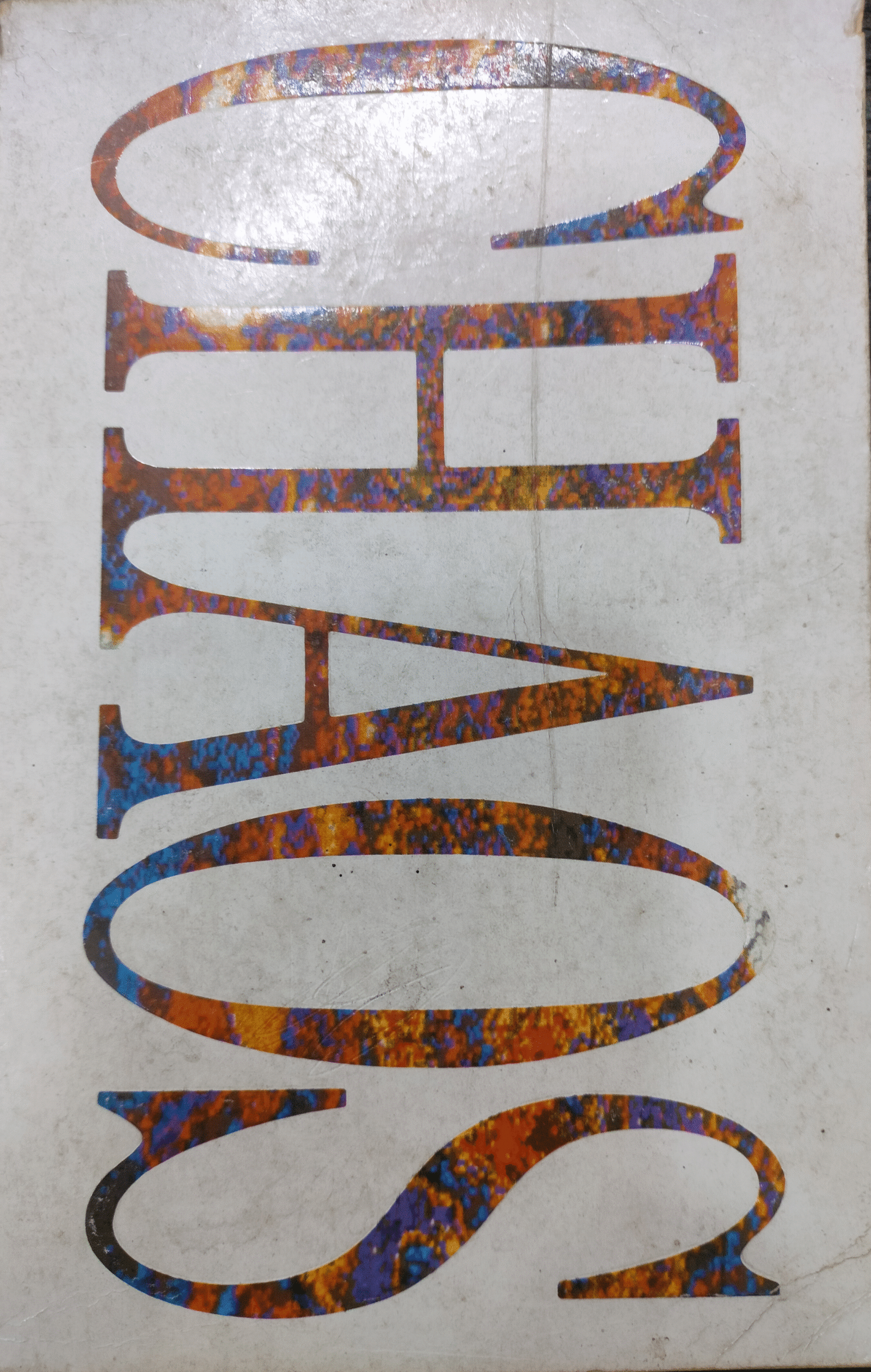
Author: James Gleick
Chaos: Making a New Science by James Gleick is a landmark work that introduced the principles of chaos theory to a broad audience. Published in 1987, the book explores how complex systems, often perceived as random or unpredictable, actually follow underlying patterns and deterministic laws. Gleick delves into the history of chaos theory, highlighting key figures such as Edward Lorenz, who discovered the "butterfly effect," and Benoit Mandelbrot, known for his work on fractals. The narrative weaves together scientific discoveries with personal stories, illustrating the interdisciplinary nature of chaos theory. Gleick's engaging writing style makes complex scientific concepts accessible to readers without a technical background. The book emphasizes the significance of nonlinear dynamics and how small changes in initial conditions can lead to vastly different outcomes. It also discusses the implications of chaos theory in various fields, including meteorology, biology, and economics. "Chaos" has been praised for its ability to convey the excitement and importance of scientific discovery. The book remains a seminal work for those interested in understanding the intricate patterns that govern the natural world. Its influence continues to resonate in both scientific communities and popular culture.